
Home / First-time RV and van-life tips
First-time RV and van-life tips
A first trip in a motorhome, trailer or van is more about planning than gear. These tips stay general on purpose: licence, insurance and parking rules change by province, state and town.

Before you leave the driveway
- Know the real height, length, width and weight of the vehicle, including bikes, air conditioners and a toad or trailer. Write the height where the driver can see it, and watch for low bridges, drive-throughs and tree limbs.
- Practise in a quiet place: turning, backing up, and judging how much space you need to stop and to swing wide.
- Confirm that you are licensed and insured for the vehicle you are driving. Requirements differ by province and state, and a rental contract can add its own rules.
- Test smoke, carbon monoxide and propane leak alarms, and learn how to shut off propane. Never sleep with a running generator in an attached or unventilated space, and never use a cooking stove as a heater.
- Plan your first nights in reserved campgrounds so you are not hunting for a legal place to sleep after dark. See our overnight parking guide before you assume a store lot is open to you.
Water, power and waste
Work out how long your fresh water, battery or hookups, and holding tanks will actually last. Dump sewage only at a proper dump station or sewer hookup. Do not empty black or grey water on the ground or into a lake, river or storm drain.
At Ontario provincial parks, many campgrounds have a trailer dumping station. Ontario Parks’ seasonal camping rules also say sewage may be discharged only at the park dump station, grey water must not go on the ground or into the water, and water hoses must not be hooked to park water taps; use the trailer fill station for drinking-water tanks. Follow the posted rules at the park you visit, even on a short stay.
On the road, in Canada and the United States
Build extra time into every driving day. Fuel, grocery and propane stops are easier in daylight. If you cross the border, bring the identification and vehicle documents that the official border agency requires, and check those agencies directly; we will not guess at customs rules here.
City streets, trailheads and highway rest areas often have time limits or bans on overnight parking or sleeping in a vehicle. A van with curtains is still a vehicle under those rules. When free parking is not allowed, book a campground or a paid stay and move on.
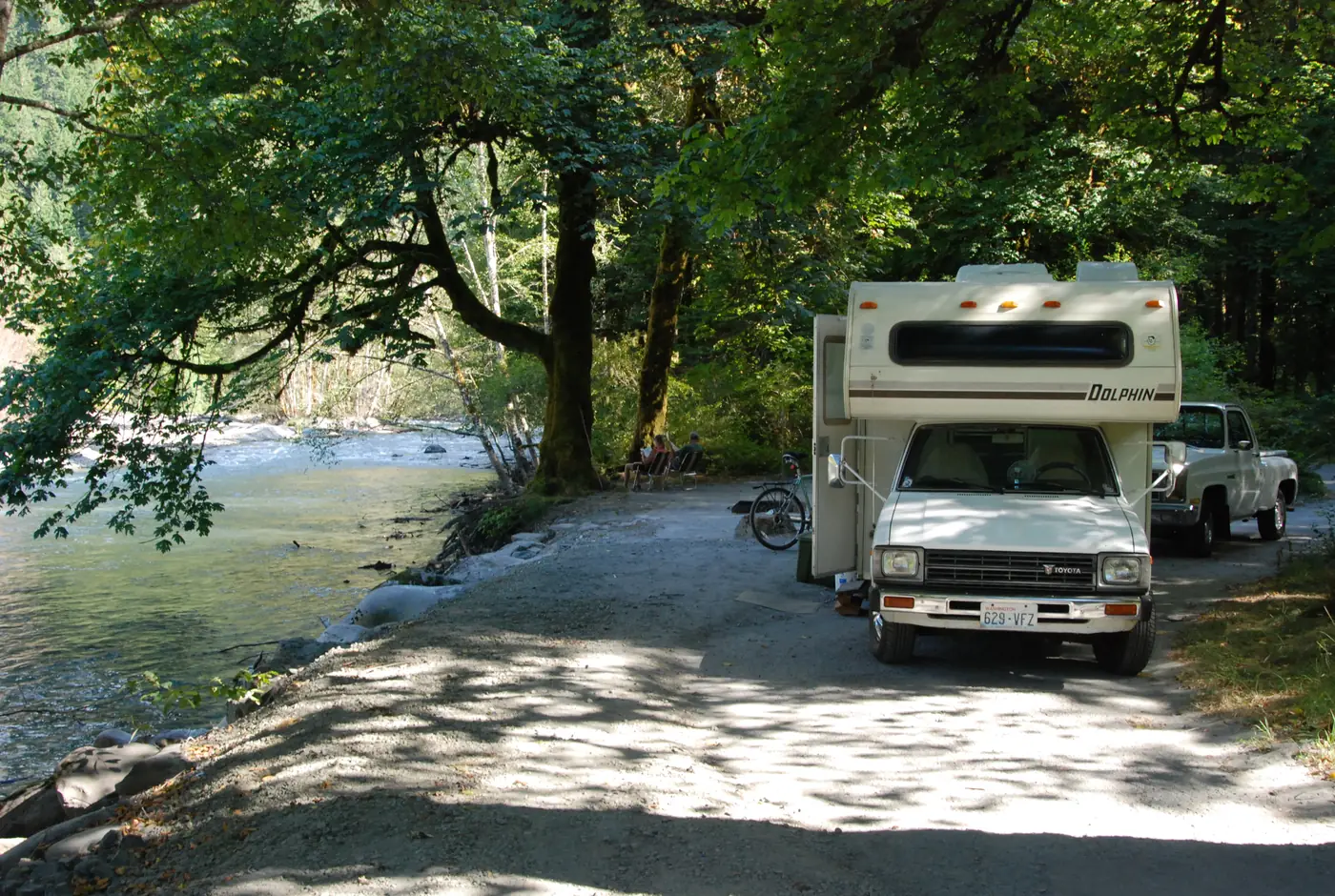
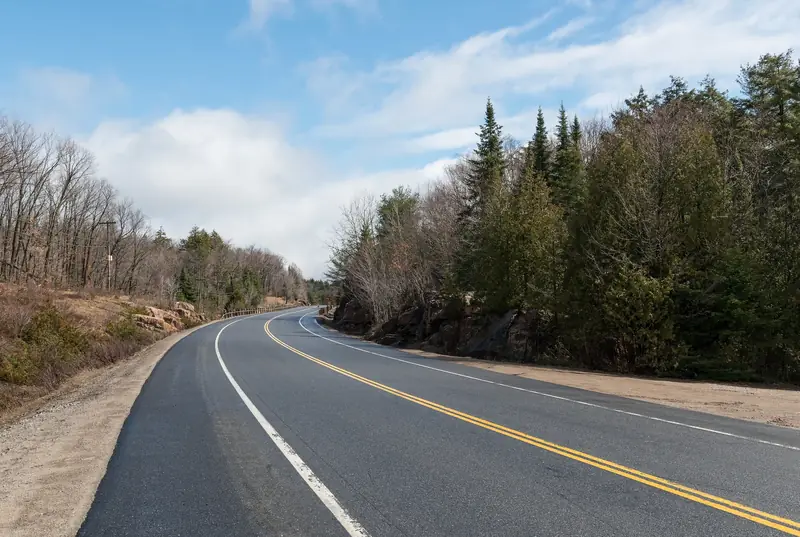
The photo on this page is from a campground in Olympic National Park in Washington state: a reminder that a reserved site is the straightforward way to spend a first night, on either side of the border.
A paid stay near Killarney, if you need a backup
Some links and booking tools on this page are affiliate links. We may earn a commission at no extra cost to you. See our affiliate disclosure.
Sources
Checked on 21 November 2026. Rules and fees change, so confirm on the official page before you go.
More guides
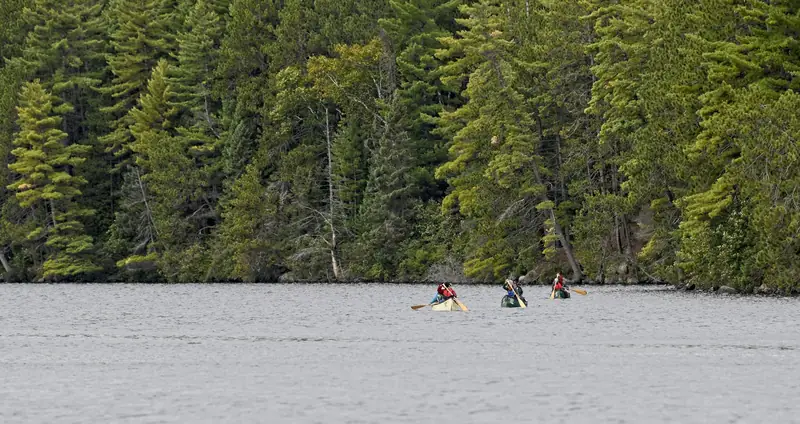
Ontario provincial park camping basics
How reservations, fees and campsite rules work, from official Ontario Parks pages.
Photo: Mykola Swarnyk, CC BY-SA 3.0. Source: Wikimedia Commons.
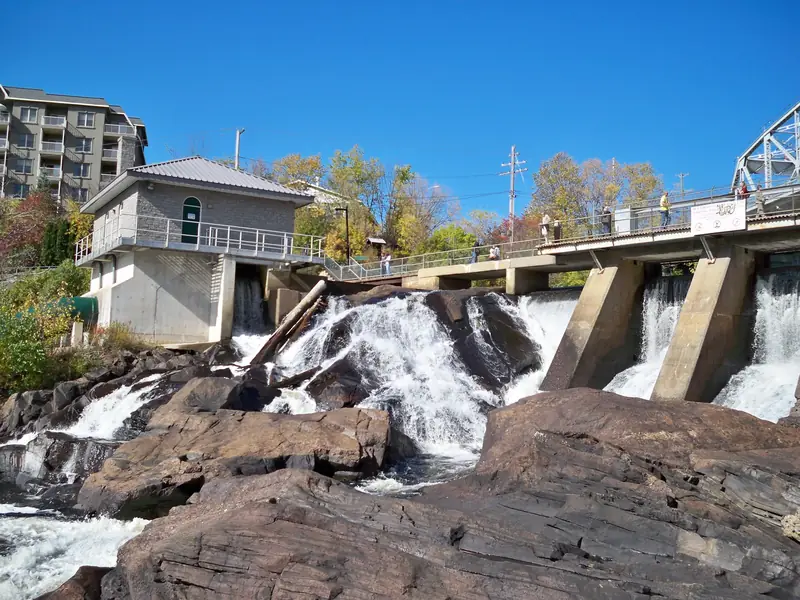
Cottage and cabin stays
What to check before you book a cottage, cabin or B&B, with a Muskoka example.
Photo: XeresNelro, CC BY-SA 4.0. Source: Wikimedia Commons.
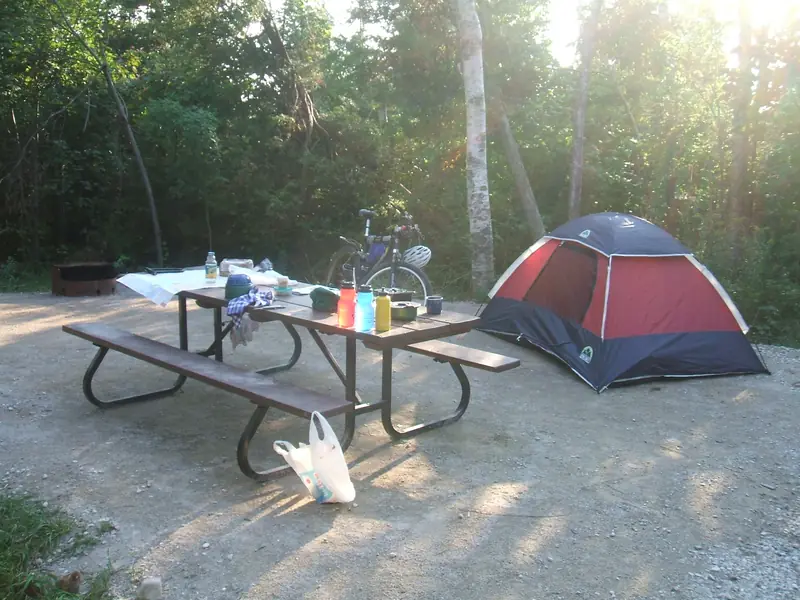
Beginner camping gear checklist
A no-product-link list of what to pack, plus how to camp more lightly.
Photo: James deBoer, CC BY 2.5. Source: Wikimedia Commons.
Can you park overnight? How to check
How to check store lots and public land in Canada and the US: always ask, and always read the signs.
Photo: DXR, CC BY-SA 4.0. Source: Wikimedia Commons.
Crown land and U.S. public land camping
Official Crown land pages by province, Ontario atlas rules, and U.S. Forest Service and BLM dispersed-camping guidance.
Photo: DXR, CC BY-SA 4.0. Source: Wikimedia Commons.


