
Home / Can you park overnight? How to check
Can you park overnight? How to check
This is a how-to-check guide, not a complete list of places where overnight parking is allowed in Canada or the United States. Some store lots, and some public land, can be legal places to spend a night in a self-contained vehicle. Many are not. There is no nationwide “you can always park at Walmart” rule in either country, and we will not publish a list of stores that supposedly say yes. Check the local rules, read the signs, and ask the manager.

The honest starting point
A parking lot is not a campground. Even where you are allowed to stay, you should not expect hookups, a reserved space, or a place to set out chairs, awnings or a grill. If a sign says no overnight parking, or a manager says no, leave and use a booked site or another legal option.
Crowd-sourced apps and old blog posts go stale. A store that allowed overnight parking last year may be under a new municipal bylaw this year. Permission at one branch does not apply to the next one down the highway.
Walmart and other businesses
On its corporate FAQ, Walmart answers “Can I park my RV at a Walmart store?” by saying it does not offer electrical service or the usual RV accommodations, that it permits RV parking on store lots “as we are able,” and that “permission to park is extended by individual store managers, based on availability of parking space and local laws.” It asks you to “contact management in each store to ensure accommodations before parking your RV.” We checked that wording on 20 November 2026 at corporate.walmart.com/askwalmart.
That FAQ is written for Walmart’s corporate site and should be read as a U.S. corporate statement, not a guarantee at every store, and not automatically as a Walmart Canada policy. We did not find a matching nationwide overnight-parking FAQ on Walmart Canada’s site. In practice, Canadian stores also differ: local bylaws, lot size and a manager’s decision can close a lot that travellers used in the past. Call the specific store, ask to speak with a manager about an overnight stay, and confirm again if signs on the lot say something different.
The same habit applies to any other business lot, in Canada or the United States: do not assume a restaurant, warehouse or visitor centre is open to overnight parking unless that location says so.
United States public land and rest areas
This page does not inventory U.S. overnight-parking sites. Rules differ by state, city, store and land manager. Some state departments of transportation publish rest-area rules that allow a limited stay in a vehicle; others forbid overnight parking or camping. We only add an overnight pin to the map when an official source for that specific site allows an overnight stay. Those pins are not a complete U.S. list, and a missing pin is not a “no.”
Dispersed camping on national forest or Bureau of Land Management land is a different system from store-lot or rest-area parking. Stay limits, vehicle rules and fire restrictions are set by the local office and can change. Start with our Crown land and U.S. public land camping guide, then confirm with the local Forest Service or BLM office and the official USDA Forest Service or Bureau of Land Management website before you stay or light a fire. National Park Service camping rules are park-specific; see the official NPS camping page.
If a manager says yes
These are courtesy points, not Walmart’s official rules: stay only as long as you were told, usually one night; park where staff ask you to, out of fire lanes and customer spaces near the doors; leave no trash; and do not treat the lot as a campsite. Buying something at the store is a decent way to be a guest, not a requirement we can document as policy.
Ontario Crown land is a different system
For the full official-source guide, including who needs a permit and how to use the Crown Land Use Policy Atlas, see Crown land camping in Ontario.
Camping is allowed for free on most Crown land in Ontario (public land outside provincial parks and conservation reserves), including Crown land covered by water, for private, non-commercial use. The official Ontario page says you may stay in a camping unit on any one site for up to 21 days in a calendar year, then you must move at least 100 metres. Follow posted signs, which can shorten or close camping in some areas.
You cannot camp on roads, trails, parking lots, boat launches, some road allowances, land someone else is authorized to use, or places posted under the Trespass to Property Act. Check the Crown Land Use Policy Atlas before you go, and have a backup plan.
Allowed camping units include a tent, trailer, tent-trailer, recreational vehicle, camper back, or a watercraft equipped for overnight accommodation. Floating accommodations are not allowed. Most non-residents of Canada need a Crown land camping permit to camp north of the French and Mattawa Rivers, with listed exceptions (including people under 18, and people who own land in Ontario). Where a permit is required, Ontario lists the cost as $10.57 including HST, per person, per night, sold through the Natural Resources Information Portal or participating ServiceOntario centres and licence issuers. Non-residents are not permitted to camp in designated green zones. Check fire restrictions before you light a campfire, pack out your litter, and extinguish fires completely.
Have a paid backup
If you cannot get a clear yes, book a campground or a room and keep driving. Official campgrounds are on our map. You can book through the official Ontario Parks reservation system or the Parks Canada reservation service when those agencies operate the site.
Sources
Checked on 21 November 2026. Rules and fees change, so confirm on the official page before you go.
More guides
Ontario provincial park camping basics
How reservations, fees and campsite rules work, from official Ontario Parks pages.
Photo: Mykola Swarnyk, CC BY-SA 3.0. Source: Wikimedia Commons.
Cottage and cabin stays
What to check before you book a cottage, cabin or B&B, with a Muskoka example.
Photo: XeresNelro, CC BY-SA 4.0. Source: Wikimedia Commons.
First-time RV and van-life tips
A practical first-trip checklist for driving, dumping and planning a backup stay.
Photo: Olympic National Park, Public domain. Source: Wikimedia Commons.
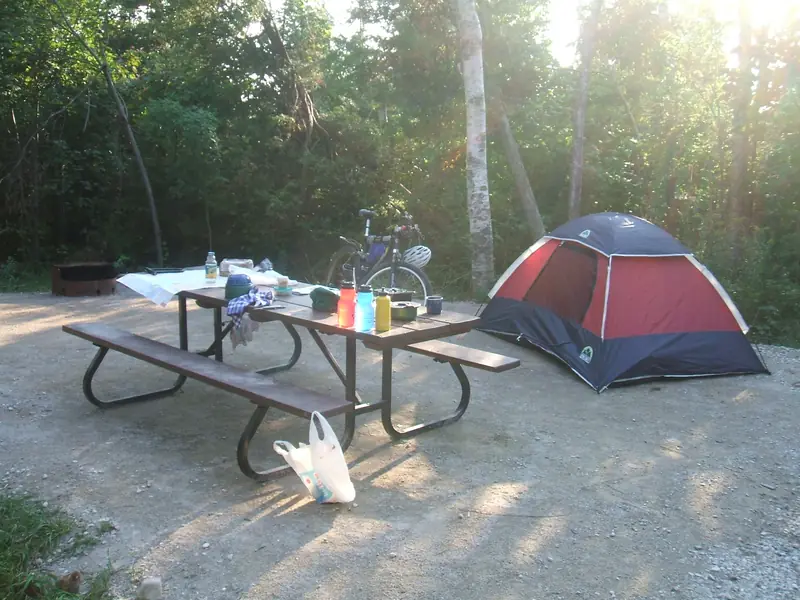
Beginner camping gear checklist
A no-product-link list of what to pack, plus how to camp more lightly.
Photo: James deBoer, CC BY 2.5. Source: Wikimedia Commons.
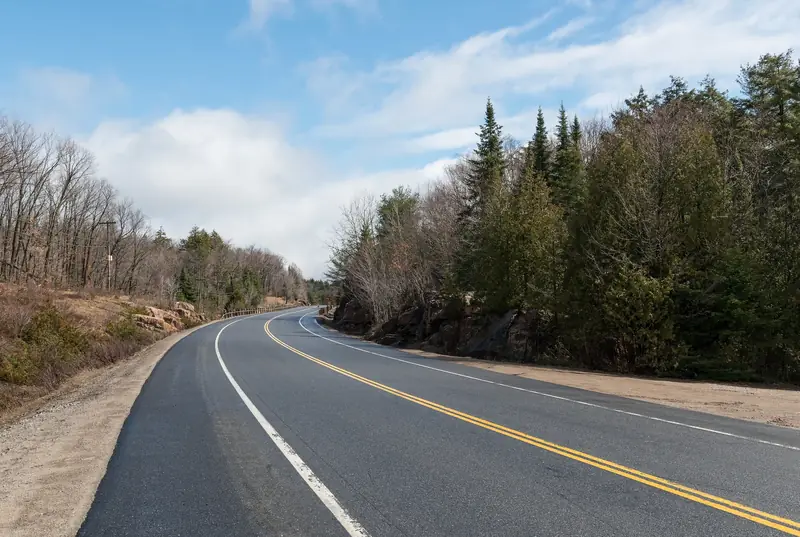
Crown land and U.S. public land camping
Official Crown land pages by province, Ontario atlas rules, and U.S. Forest Service and BLM dispersed-camping guidance.
Photo: DXR, CC BY-SA 4.0. Source: Wikimedia Commons.


